
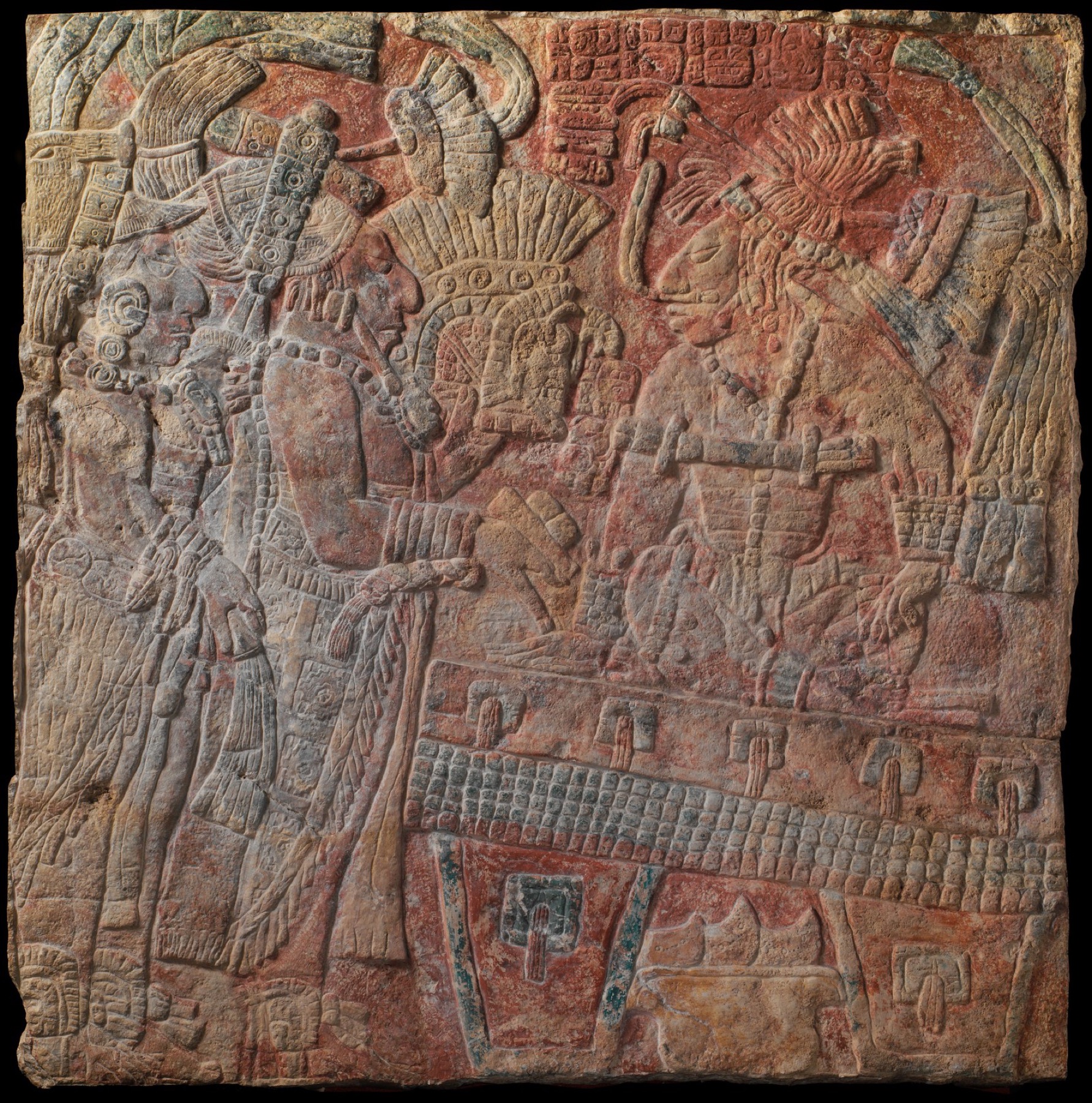
Relief with Enthroned Ruler
Maya artist, Guatemala · 770 CE · limestone with paint · about 3 feet square · The Metropolitan Museum of Art, 1979.206.1047 · public domain
Read aloud: the background
This stone panel was carved by a Maya sculptor in the early 770s for the doorway of a temple at La Pasadita, a small hilltop town in what is now Guatemala. It was set overhead, so visitors had to look up to see it. It still has some of its original red, yellow, and blue-green paint.
The square blocks are writing, and scholars can read most of it. It names the people in the scene. The man on the throne is the king of Yaxchilan, the powerful city across the river. The writing calls him Chel Te' Chan K'inich, the name he had before he took the royal name Shield Jaguar. The man holding out a feathered headdress to him is Tiloom, the lord of La Pasadita. His title is sajal: a local governor who served the king. Under the throne sits a bowl of fruit, part of what Tiloom brought.
The sculptor signed it, too. His name was Chakalte'. For the Maya, a carving like this was a public record of who ruled, who was loyal, and who made it.
Worth noting for students: the writing was unreadable for centuries. It was decoded mostly in the last seventy years, and Maya people still live in Guatemala and Mexico today.